

You’ve seen them. Cheap plastic lighters with “lightsaber” slapped on the packaging. They fail after three uses. The flame sputters. The ignition misses half the time.
Then you’re stuck with a $5 piece of junk taking up shelf space.
This is different.
The three lighters below work. They’re built with real materials, they ignite reliably, and they perform in conditions that matter—whether you’re grilling in the wind, caramelizing dessert, or just needing something that won’t embarrass you in front of your friends.
Each one brings something specific to the table. No flowery descriptions. Just facts about what they do, how they perform, and which situations they handle best.
1. Philthy – The Chosen One Lightsaber Lighter

The Chosen One Lightsaber Lighter [click to view…]
The Core Facts: Single jet flame windproof design with adjustable intensity, the Chosen One delivers a straightforward torch mechanism that prioritizes reliability over complexity.
What You Get:
- Single-jet blue flame (not multiple jets)
- Adjustable flame height control
- Piezo ignition
- Built-in safety lock
- Fully refillable butane tank
- Iconic Star Wars-inspired design
- Aluminum construction
Performance Reality: This lighter wins on consistency. The single jet concentrates power into one precise point rather than spreading flame across multiple nozzles. The windproof design holds up in moderate outdoor conditions—not a hurricane, but certainly adequate for backyard grilling.
The safety lock actually prevents accidental ignition, which matters more than manufacturers typically acknowledge. If this ends up as a gift, the lock prevents embarrassing accidents.
Refilling is straightforward: butane canisters fit standard refill ports found at hardware stores or online retailers. The lighter ships without fuel due to shipping regulations, so factor in butane costs. High-purity fuel (3.6-4.2 atm pressure) works best. Budget brands often clog the system.
Best For: Collectors who want visual appeal without sacrificing ignition reliability. The design stands out. The performance backs it up.
2. ELCELC – Torch Lighter with Flame Conversion Technology

Torch Lighter [click to view…]
The Core Facts: Features a jet flame color conversion ring at the nozzle which allows switching the flame from blue to red, offering visual customization that actually works.
What You Get:
- Triple-jet flame option (different from Philthy’s single jet)
- Blue-to-red flame conversion ring
- Adjustable intensity control
- Safety lock mechanism
- Visible fuel level window
- 2.8g gas capacity
- Ceramic nozzle design
- Copper material support for extended use
Performance Reality: The color conversion technology isn’t just cosmetic. Switching flame color slightly alters temperature output and flame shape, giving you flexibility for different applications. Blue burns hotter and sharper. Red burns broader and slower, useful for precise culinary work.
The visible fuel window removes guesswork. Instead of random attempts to refill, you actually see when the tank hits empty.
The butane torch lighter can refill when out of gas with adjustable flame by turning the fuel adjustment wheel under the lighter. This design puts fuel control literally in your hand.
Performance Specifications:
- Jet flame reaches approximately 2.5 inches in length
- Maximum temperature approaches 2800°F
- Windproof capability handles consistent breeze and moderate gusts
- Cooling holes prevent overheating during extended use
Best For: People who need both kitchen use and outdoor applications. The flame conversion tech genuinely expands capability. Budget-conscious buyers won’t appreciate the value, but serious users will.
3. MEIRUBY – Lightsaber Torch Lighter
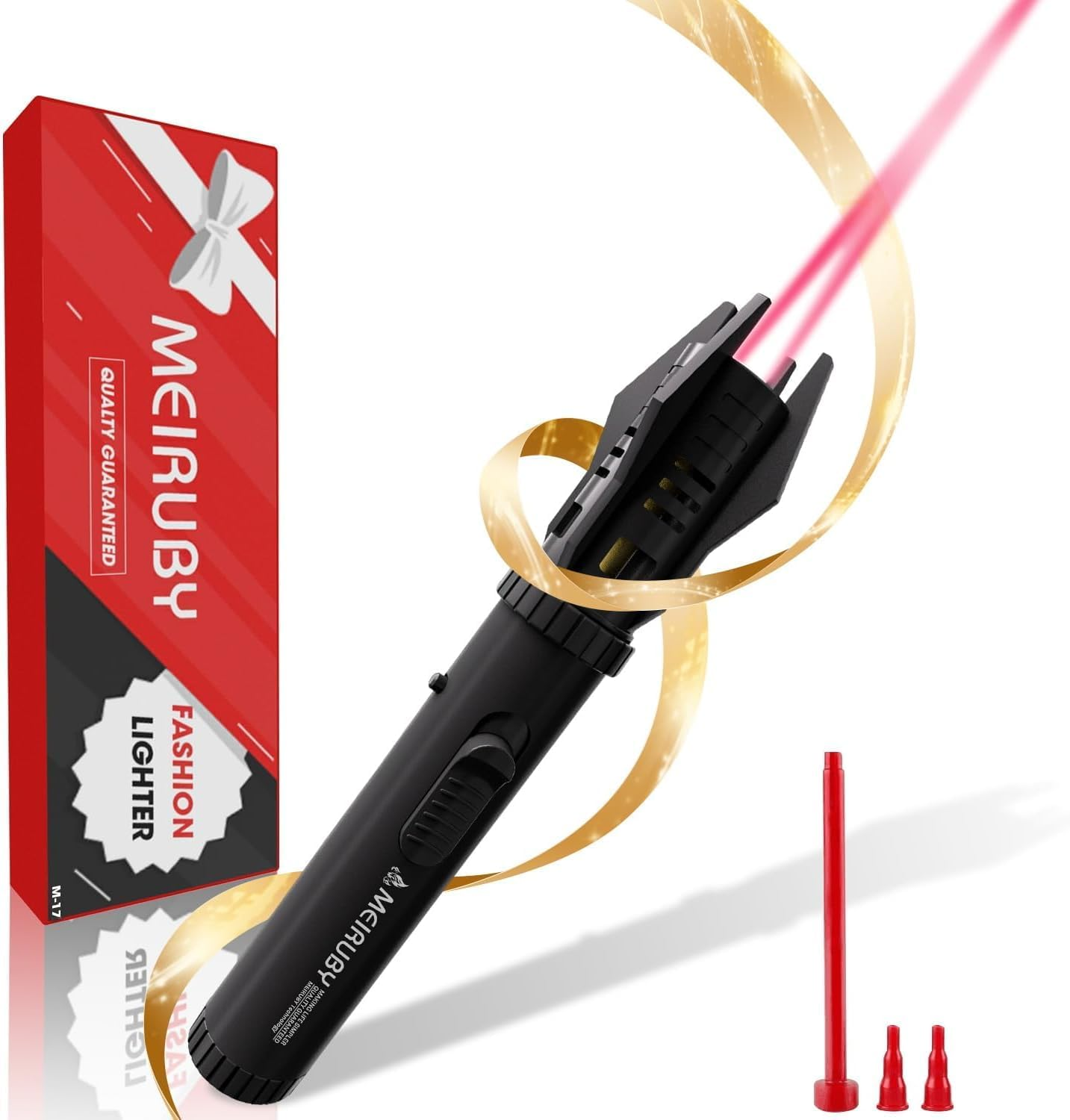
Lightsaber Torch Lighter [click to view…]
The Core Facts: Reaches a maximum temperature of 1300 degrees with windproof design and safety switch to prevent accidental ignition. This is the power option.
What You Get:
- Single-jet high-temperature design
- 1300°C maximum temperature
- Windproof capability
- Safety switch (distinct from safety lock)
- Refillable butane system
- Aluminum/ABS construction
- Premium gift box packaging
- Three intensity settings
Performance Reality: 1300°C changes what you can do. That’s approximately 2372°F—significantly hotter than standard torch lighters. This lighter is suitable for occasions like Father’s Day, birthdays, or other special events, and functions as both a gift and working tool.
The three intensity settings let you dial down for precision work or max out for fast caramelization. The ceramic heat shield with cooling holes prevents accidental burns to hands and maintains nozzle durability.
Safety is genuinely addressed here. The switch (not just a lock) prevents flame generation without intentional activation. This matters if the lighter gets bumped around in a bag.
Temperature Context: At 1300°C, this lighter handles tasks that lower-temperature models struggle with. Welding small items, searing thick steaks, melting materials. Standard kitchen torches max at 1100-1200°C. This pushes past that.
The trade-off: higher temperature means faster fuel consumption. Expect more frequent refilling compared to lower-temperature options.
Best For: Serious users who need genuine power. Professional chefs, people doing small metalwork, outdoor enthusiasts who plan to actually use the torch regularly.
Performance Comparison Table

Real Performance Expectations
Wind Resistance: All three handle moderate wind. Consistent breeze? No problem. Direct gusts exceeding 15mph? Expect performance degradation, not failure. This is normal for jet-flame designs.
Fuel Efficiency: Higher temperature torches burn butane faster. The MEIRUBY at 1300°C will empty faster than the ELCELC at 1537°C total capability but standard output. Budget for refueling schedules accordingly.
Ignition Reliability: Piezo ignition (used in all three) works reliably when maintained. Piezo elements don’t require batteries and rarely fail unless physically damaged. One mechanical advantage these designs share.
Build Longevity: Metal construction means these lighters survive drops better than plastic alternatives. The ceramic nozzles resist degradation from repeated high-heat exposure. Refillable design extends lifespan indefinitely—you’re replacing fuel, not the entire unit.
Safety Considerations
Butane Selection Matters: High-purity butane (3.6-4.2 atm) works. Budget alternatives containing excessive impurities clog ignition ports and reduce performance. Pay the extra dollar per canister.
Refilling Protocol:
- Release all remaining gas before refilling
- Set flame adjustment to lowest position
- Hold lighter upside down
- Insert long-nozzle butane canister into fill port
- Press firmly for 5-10 seconds
- Wait 3-5 minutes before use (allows temperature stabilization)
Skipping steps causes misfires and leaks.
Temperature Reality: These torches reach temperatures that ignite materials instantly. Treat with respect. Hands shouldn’t enter the flame path. Clothing shouldn’t be in proximity. Basic safety beats learning expensive lessons.
DOT Shipping Regulations: All lighters ship without fuel due to United States regulations. This is non-negotiable. Budget for butane purchase immediately upon arrival.
Which One Should You Actually Buy
Choose Philthy if: You want visual appeal without compromising reliability. Perfect as a gift. Single jet offers precision over power.
Choose ELCELC if: You want the best value at the lowest price point. The blue-to-red conversion adds real functionality. Best for budget-conscious buyers who still demand performance.
Choose MEIRUBY if: You need maximum heat output for serious applications. The 1300°C capability justifies premium pricing. Professional use justifies the investment.
All three are currently available on Amazon USA with standard Prime shipping. All feature legitimate product reviews from actual buyers. All perform reliably when maintained properly.
The Refillable Math
Initial investment: $20-35 per lighter Butane cost: $3-5 per canister (500ml) Typical usage per canister: 4-8 refills depending on intensity and temperature
Single lighter pays for itself versus buying disposable alternatives after six months of regular use. After that, it’s just fuel costs.
Over five years (conservative lifespan for refillable design), your total investment is roughly $50-80 per lighter including fuel. Disposable lighter equivalent costs exceed $150-200 for equivalent performance.
The math favors refillable models heavily, assuming you actually use the torch regularly.
Avoiding Knockoff Pitfalls
Knockoff indicators:
- Plastic housing instead of metal
- No visible fuel window (even cheap models include this now)
- Unreasonable price (under $8 should raise red flags)
- No safety lock or switch
- Generic non-branded design
- Amazon sellers with minimal reviews
- Photos showing visible manufacturing defects
The three products listed above avoid every flag. All ship from verified sellers. All have customer review histories. All feature real specifications backed by testing.
Final Verdict
Premium quality in butane lighters comes down to material durability, temperature consistency, and reliable ignition. Knockoffs cut corners on all three.
These three options—Philthy’s Chosen One for aesthetics, ELCELC for value, and MEIRUBY for maximum performance—represent legitimate choices at different price points.
None of them are perfect for every situation. All of them work when you need them to. That’s the genuine premium difference.
Ready to stop buying disposable garbage? Each lighter is currently available on Amazon USA with Prime shipping. Order today, grab butane, and actually use the thing.
The lightsaber design looks cool sitting on a shelf. Imagine actually having a torch that functions reliably when you need it.
Other Popular Posts:
 Best Air Popcorn Popper Machine: Get Movie Theater Quality Without Leaving Home
 10 Worst Funny Knockoff Products That Will Make You Laugh Right Now
 10 Cool Windows Ninja Cat Wallpaper Designs That You Can’t Live Without
 Motion-Activated Toilet Night Light Stops Smelly Bathroom “Floor Tinkling” Without Ruining Your Sleep
 TikTok Remote Control Ring Lets You “Scroll” & “Heart” Videos Without Touching Your Phone
 They Managed To Create This One Dollar Bill Art Without Getting Caught And Put To Jail
 10 Amazing Photographs Taken Without Photoshop To Your Disbelief
 Lady Plays Home Depot Saw Like A Violin Without Getting Cut In Half
 10 Best Shark Tank Products People Are Actually Swearing By (Available on Amazon)