
You’ve had the idea for months.
That painting you’ve been meaning to start. The novel outline collecting dust on your desk. The story world you can’t stop thinking about. Yet somehow, when you sit down with a blank canvas or a blank page, nothing happens.
You’re not lazy. You’re not untalented. You’re stuck.
This isn’t a character flaw. It’s a design flaw in how most people approach creativity.
The real barrier to prolific output isn’t inspiration. It’s the tyranny of infinite choice. When faced with a blank page, you’re forced to make dozens of micro-decisions before you write a single word: What should the story be about? What style should I use? What mood? What character? That mental load—that’s where creative momentum dies.
The good news? There’s a proven tool that eliminates this decision paralysis in seconds.
Why Your Brain Is Sabotaging Your Creativity
When you’re standing in front of a blank canvas or an empty document, your brain enters what researchers call “decision paralysis.” Before you can actually create, you’ve already exhausted yourself making choices.
This phenomenon has three key drivers:
1. The Perfectionism Trap
Most blocked creators believe their first attempt must be good. This belief is the death of prolificacy. Professional artists and writers don’t succeed because everything they make is perfect. They succeed because they make more things. Quantity comes first. Quality follows naturally.
2. The Cognitive Load Problem
Every creative choice—subject, style, tone, perspective, medium—consumes mental energy before the actual work begins. High cognitive load = creative fatigue before you even start.
3. Lack of External Structure
Without a predetermined constraint, you’re relying entirely on internal motivation. For hesitant creators, internal motivation is unreliable. You need external structure.
Here’s what neuroscience reveals: Constraints don’t limit creativity. They enable it.
When you’re given specific boundaries—a defined subject, a color palette, a narrative conflict—your brain stops debating options and starts solving problems. This is the fundamental shift that converts sporadic creative attempts into sustainable daily practice.
The Prompt Card Revolution
Prompt card systems operate on a simple principle: remove the decision, keep the creative work.
Instead of asking “What should I create today?” you draw a card. Instead of debating aesthetics, you execute a specific constraint. Instead of battling perfectionism, you’re completing a defined task.
The best systems use combinatorial architecture. They don’t offer 50 prompts that run out in weeks. They offer modular cards that combine to create thousands—or billions—of unique prompts. This ensures the ritual stays fresh for years, making the initial investment in the tool worthwhile.
But here’s where most people miss the real power: these aren’t just inspiration decks. They’re behavioral engineering tools designed to build creative muscle memory through structured repetition.

The Best Prompt Card Systems
For Visual Artists: The Endless Art Challenge Card Deck
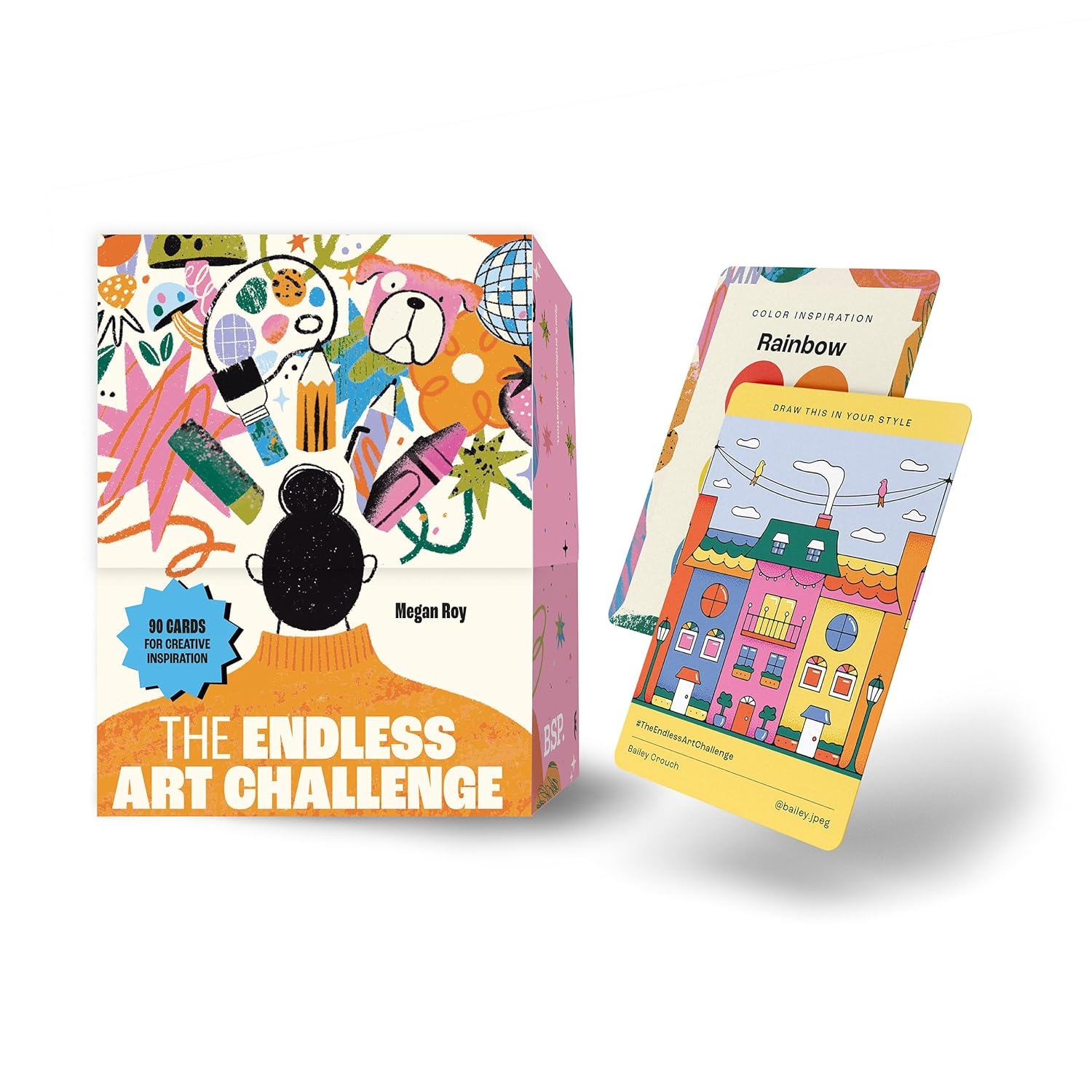
The Endless Art Challenge Card Deck [click to view…]
What it is: 90 cards separated into three categories—Subject Matter, Color Inspiration, and Wild Card.
How it works: Draw one card from each category. Combine them into a single prompt. That’s your day’s assignment.
Example: You draw “A Fantastical Machine” + “Monochromatic Sepia” + “Add Some Writing.” Now you have a complete, specific creative task.
The numbers: 25,000+ unique combinations means years of fresh daily prompts.

The Endless Art Challenge Card Deck [click to view…]
Why it works for hesitant creators: The Wild Card category forces technical experimentation. You might be instructed to paint using only a palette knife, or draw with your non-dominant hand. This prevents the ritual from becoming stale while building diverse skills.
The community element: Artists share completed work using #TheEndlessArtChallenge. Public accountability transforms the private act of creation into a shared community experience. This social component is critical for maintaining consistency in hesitant creators.
Additional feature: The back of each card features unique artwork by different global artists, turning the deck itself into a miniature gallery for visual inspiration.
For Fiction Writers: Two Tumbleweeds Writing Dice
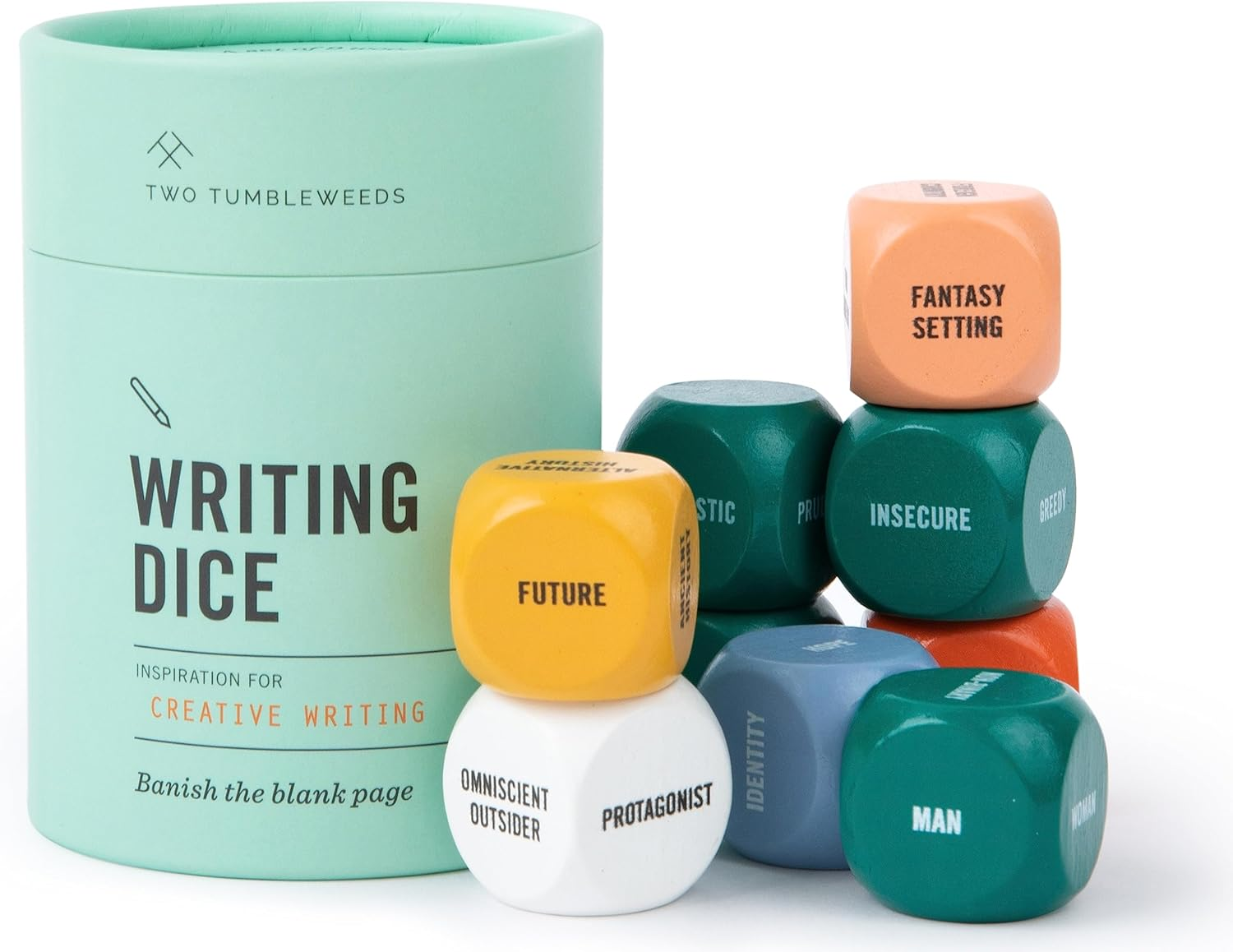
Two Tumbleweeds Writing Dice [click to view…]
What it is: A set of 9 color-coded wooden dice (1 inch) that cover Who, What, When, Where, and Why in depth.
How it works: Roll the dice and let the results guide your writing session. Each die reveals story elements—characters, settings, conflicts, timing, and narrative purpose. Combine the results to form a complete writing prompt.
Example: You roll and get “A bitter rival” (Who) + “An abandoned mansion” (Where) + “Racing against time” (Why). Now you have a complete scenario to write toward.
The numbers: Millions of combinations ensure you’ll encounter fresh material that helps you find your creative flow.
Why it works for fiction writers: Works for any type of creative writing—from stories and novels to screenplays and comics. The dice can also be used for character creation or role-playing games.
Who uses this: Can be played alone, with friends and family, or to teach story structure in the classroom, while encouraging creativity and collaboration.
Design advantage: The dice are made of wood with easy-to-read text and come with full instructions that include suggested exercises and teaching variations for the classroom.
For Worldbuilders: The Ultimate RPG Worldbuilding Deck
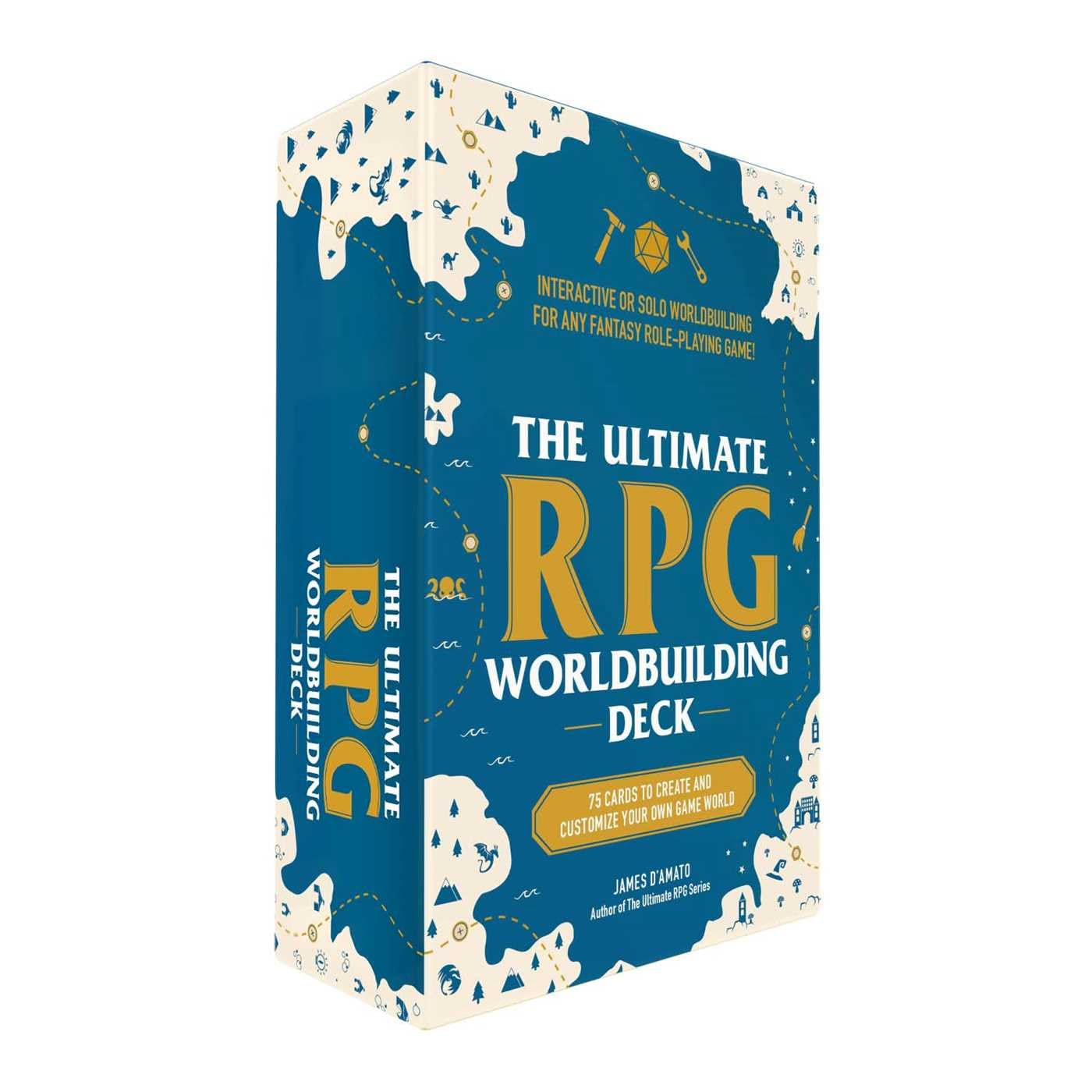
The Ultimate RPG Worldbuilding Deck [click to view…]
What it is: 75 tarot-sized cards designed to help bring whole worlds to life. Cards are organized into five categories.
How it works: Draw a card from the category you need, select details from the available options, and answer the prompts to specify who or what is joining your world, and how they connect to your existing story and adventurers.
The five categories: People (NPCs both allies and antagonists), Institutions (Organizations and factions within the world that PCs can interact with), Places (Evocative landmarks and locations for exploration), History (Events and cultural background building that add flavor to the world), and Rumors (Unreliable stories that hint at interesting but uncertain concepts for PCs to explore).
Example: Draw a “Places” card describing an abandoned temple, then use the prompts to develop what made it sacred, who desecrated it, and what mysteries remain—instantly creating a rich location with narrative depth.
Why it’s better than generic worldbuilding: Each card poses a few prompts but they all inspire you to add details that truly affect how your players interact with your world. The prompts ask you to fill in with two positive things about a location and two negatives, making settings more immersive.
Who uses this: Game masters can use it solo or to build out a session pre-game-night. It can also be used in-game on the fly for collaborative worldbuilding right at the table.
Professional endorsement: “The Ultimate RPG Worldbuilding Deck is 75 tarot-sized cards designed to help bring whole worlds to life. It works.” —Geek Native Simon & Schuster
For Hybrid Creators: Ranger Dylusions Creative Journal
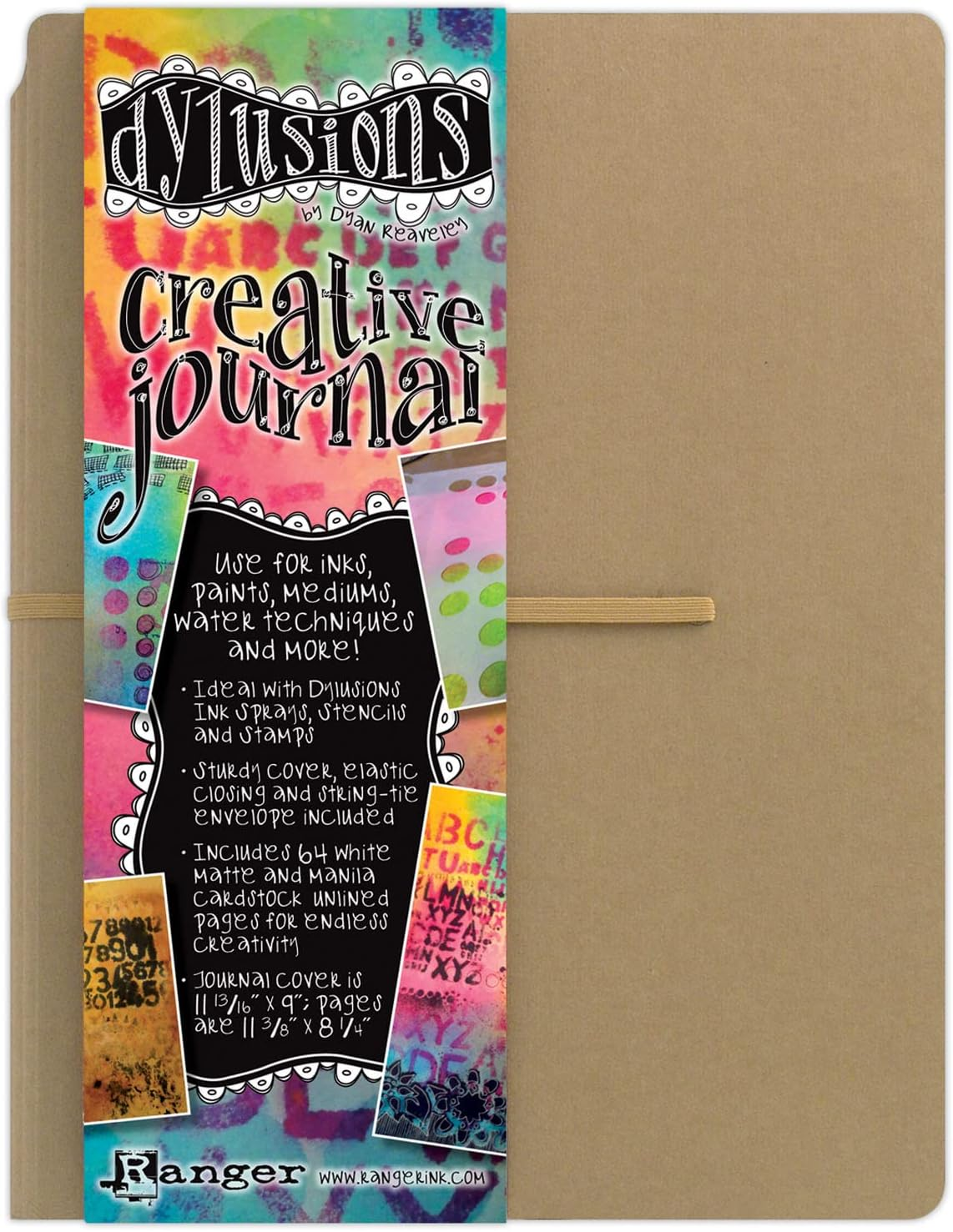
Ranger DYJ34100 Dylusions Dyan Reaveley’s Creative Journal [click to view…]
What it is: A journal featuring 64 pages of 8-1/4 x 11-3/8 inch heavyweight mixed media cardstock designed for art and creative expression.
How it works: A blank journal that is a combination of manila cardstock and matte white heavy cardstock, ideal for the application of ink sprays and techniques using water, inks, paints and mediums. Use the pages for visual work, written reflection, mixed media collage, or any combination.
Design features: The journal includes a folder on the inside cover to use for storage and an elastic band closure to keep all your work safe. Amazon The cover is made from sturdy kraft chipboard and includes a string tie envelope for convenient storage.
Why it works for hesitant creators: The pages are very thick, which allows you to use a lot of wet media and dry media. The cover is very sturdy and accepts any kind of media to create your own custom cover design. There are no pre-made sections forcing a specific layout—complete creative freedom.
Who uses this: Artists report this is their go-to art journal for combining multiple mediums and techniques on the same page.
Professional endorsement: Highly rated by creators who describe it as “brilliant sketchbook/journal with paper that can take pretty much most materials” and ideal for “mixed media projects.”
Flexibility advantage: Unlike structured guided journals, the Dylusions journal gives you complete creative control while providing a durable surface that can handle anything—painting, writing, stamping, collage, or a mix of all of them.
How to Actually Build a Sustainable Creative Habit
Buying the deck is step one. Using it consistently is where transformation happens.
The research on habit formation reveals that frequency matters more than duration. Daily 20-minute sessions beat weekly 4-hour marathons for building creative muscle memory.
Here’s the operational framework:
Step 1: Draw Without Debate (The Instant Commitment)
No redrawing. No “let me pick a different card.” Draw once, commit absolutely. This rule prevents cognitive friction from reentering the process.
Step 2: Timebox the Session (The Bounded Challenge)
Set a timer for 20–45 minutes. The task is not to create a masterpiece. The task is to complete the prompt within the time limit. Timeboxing prevents the creative task from becoming overwhelming.
Step 3: Execute Imperfectly (The Prolific Mindset)
Focus on output, not quality. A rough sketch counts. A 50-word story outline counts. Done beats perfect every single time.
Step 4: Mark It Complete (The Ritual Lock)
Physically mark the session as finished. Cross it off. Take a photo. This formal completion triggers the neurological reward loop that builds habit.
Step 5: Share or Track (The External Driver)
Use the deck’s built-in community hashtag, or maintain a personal log. External accountability is the most reliable driver of consistency.
The Real Transformation
The hesitant creator doesn’t become prolific because they found inspiration. They become prolific because they built a system that removes the need for inspiration.
Every successful artist, writer, or creator you admire produces work consistently. Not because they wake up motivated every day. But because they have a structure that makes consistency automatic.
Prompt card systems are that structure.
When you remove the choice, you remove the barrier. When you remove the barrier, you remove the excuse. When you remove the excuse, you start shipping work daily.
The transformation from blocked to prolific doesn’t happen through a single brilliant idea. It happens through 100 imperfect sketches. 50 rough story outlines. 200 days of showing up to a predetermined constraint and doing the work anyway.
The cards are the permission structure. The consistency is the actual tool.
Ready to Start Building Your Creative Habit?
The first step is simple: pick the product that matches your creative discipline. Order it today. Tomorrow morning, draw your first card.
That’s not inspiration. That’s the beginning of prolific output.
The blank page stops being a threat when you have a prompt in hand.
Other Popular Posts:
 10 Clever Artists Who Let Nature Do The Hard Work For Them (With Incredible Results)
 10 CREATIVE Art Lover Gifts That Would Amaze Even Van Gogh
 257 Unique Business Cards (Most Creative Ideas Ever! #111 Blows My Mind!)
 Cancer Survivor Designs The Cards She Wishes She’d Gotten From Family & Friends
 He Bought Some Thrift Store Art. And Painted Your Favorite Characters In. The Results Will Astound You.
 10 Creative 3D Street Art Wall Murals That Will Lighten Up Your Day
 10 Most Popular Street Art Pieces That Readers Everywhere Have Loved
 10 Cool NEON Art Lights That Will Transform Your Walls Forever
 101 Creative Coffee Latte Art Designs That Will Energize You Just By Looking